Salt Is Not Just Salt: A Guide to the Crystals in Your Pantry
By Sofia Renn · Feb 3, 2025
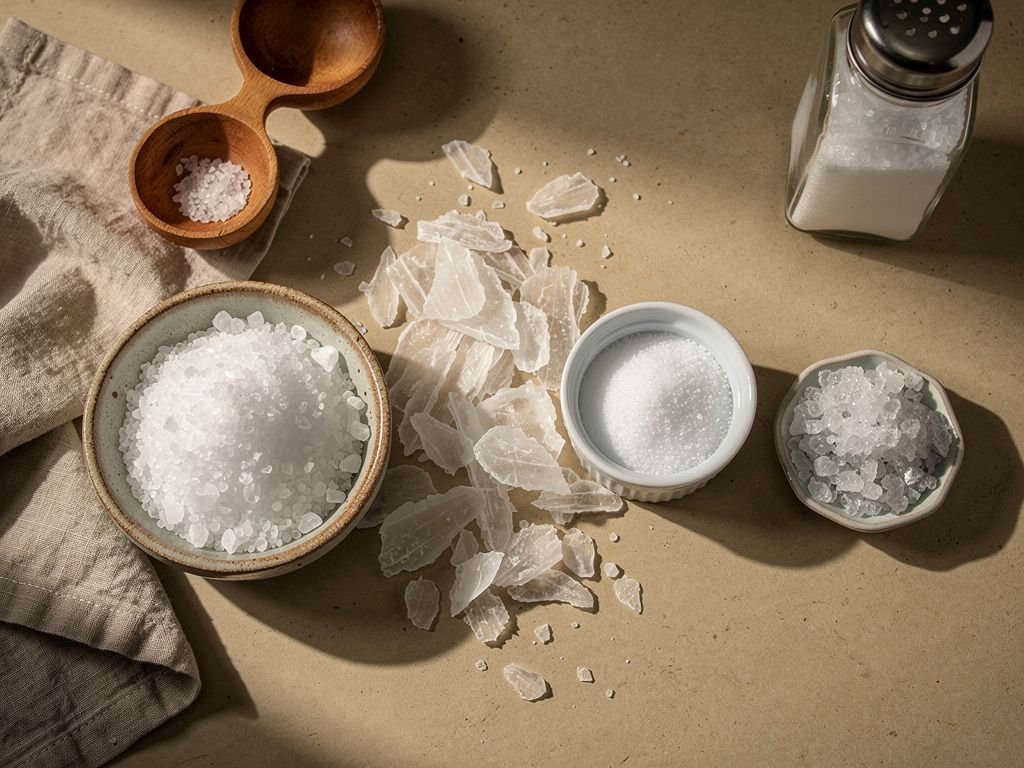
Salt is the single most important seasoning in any kitchen, yet it is also the most misunderstood. Many home cooks treat it as a single, uniform ingredient, grabbing whatever container is closest and adding a pinch without thinking about how that particular crystal will behave. But salts vary enormously in shape, density, and mineral content, and those differences change both how much you should use and what a dish tastes like when it is finished.
Table Salt: Small, Dense, and Sneaky Strong
Table salt is the finely ground, uniform crystal most of us grew up with, often mixed with an anti-caking agent and sometimes iodine. Because the crystals are so small and pack tightly together, a teaspoon of table salt contains significantly more sodium by volume than the same teaspoon of a flakier salt. This is why recipes that simply say a teaspoon of salt without specifying type can produce wildly different results. If you measure by volume rather than weight, table salt is easy to oversalt with, since so much of it fits into a small spoon.
Kosher salt, by contrast, has larger, irregular flakes with more air between them. Chefs prefer it for cooking because it is easy to pinch and sprinkle evenly by hand, and because its coarser structure means the same volume delivers less sodium than table salt, giving you a wider margin for error. Note that different brands of kosher salt are not even consistent with each other; Diamond Crystal is notably less dense than Morton, so a recipe written with one in mind can taste oversalted if you swap in the other without adjusting.
Sea Salt and Its Many Forms
Sea salt is harvested by evaporating seawater, and its flavor and texture depend heavily on where and how it was made. Fine sea salt behaves similarly to table salt in cooking, but flaky sea salts like Maldon are prized as finishing salts, added at the very end of cooking or right before serving rather than during. Their large, pyramid-shaped crystals dissolve slowly on the tongue, giving little bursts of crunch and salinity that a fully dissolved salt cannot replicate. This is why a good flaky salt on a sliced tomato or a piece of grilled meat feels so different from salting the same food during cooking.
Then there are specialty salts: smoked salts that carry the flavor of the wood used to smoke them, black lava salt with activated charcoal for a dramatic color and a slightly mineral taste, and pink Himalayan salt, whose trace minerals give it a faint pink hue and a marginally different flavor profile, though the difference in taste from regular salt is often overstated by marketing. These specialty salts shine as finishing touches rather than workhorse cooking salts, since their unique characteristics are easy to lose once dissolved into a sauce or a pot of boiling pasta water.
How to Choose
A simple rule of thumb: use kosher salt for the bulk of your cooking, seasoning meat, vegetables, and pasta water, because its texture makes it forgiving and easy to control by feel. Save a good flaky sea salt for finishing dishes where you want a textural pop, like a piece of roasted fish, a slice of good bread with butter, or a caramel dessert. Reserve table salt mainly for baking, where recipes are calibrated by weight or precise volume and its fine, consistent grain dissolves quickly and evenly into batter.
The biggest mistake home cooks make is not choosing the wrong salt but failing to taste as they go. Salt should be added in layers throughout cooking, not dumped in all at once at the end, because it needs time to penetrate and season food from the inside rather than just sitting on the surface. Once you start tasting and adjusting at each stage, you will find that the type of salt matters less than the habit of using it thoughtfully.
Keep Reading
More from the Blog
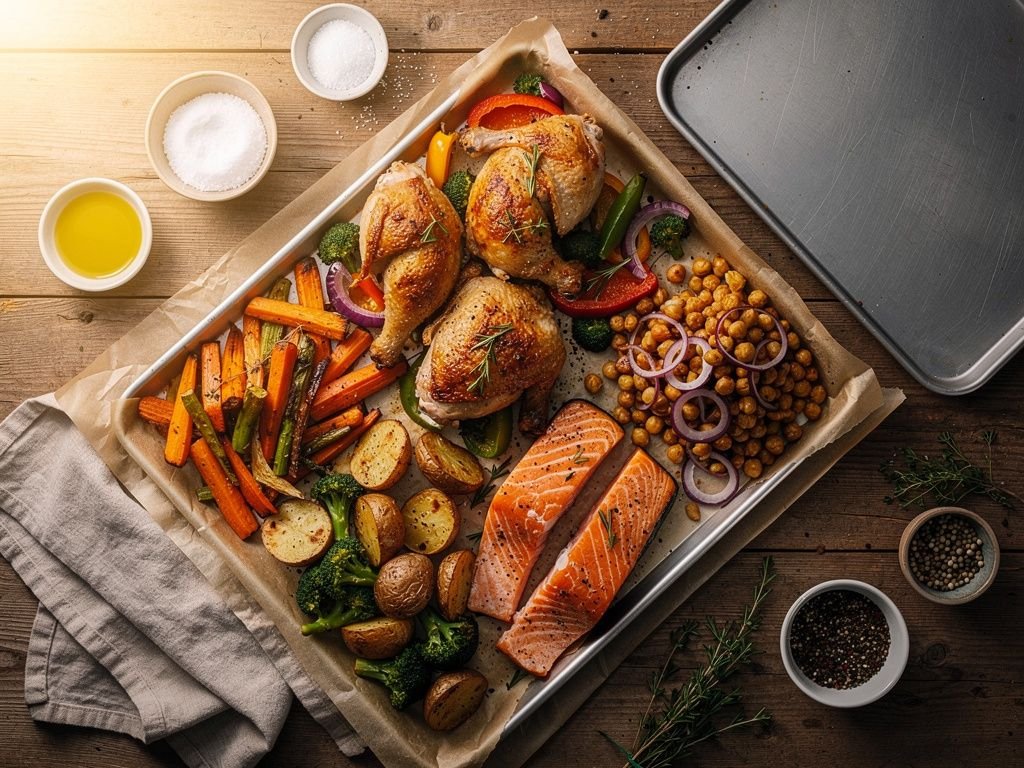
The Sheet Pan Method: One Pan, Five Dinners, Minimal Cleanup
Sheet pan cooking is not just a trend recipe format. It is a genuinely efficient system for weeknight meal prep once you understand the logic behind it.
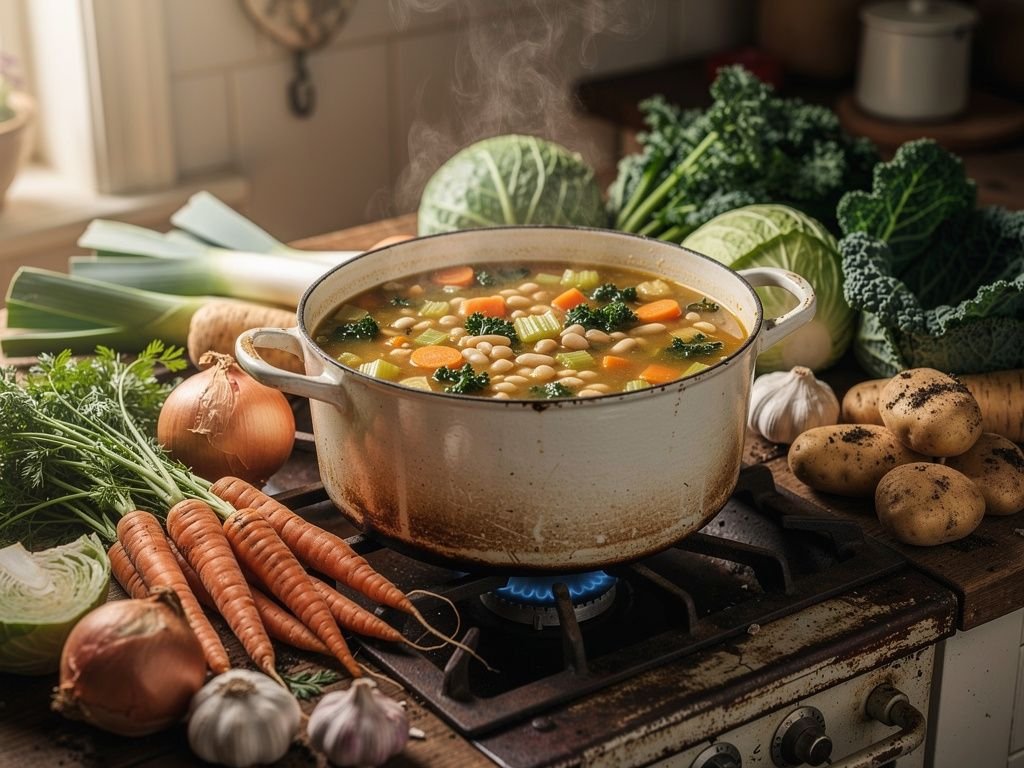
The Winter Cook's Guide to Building a Better Soup
A great soup is built in layers, not thrown together at once. Here is how to think through the process for reliably good results.
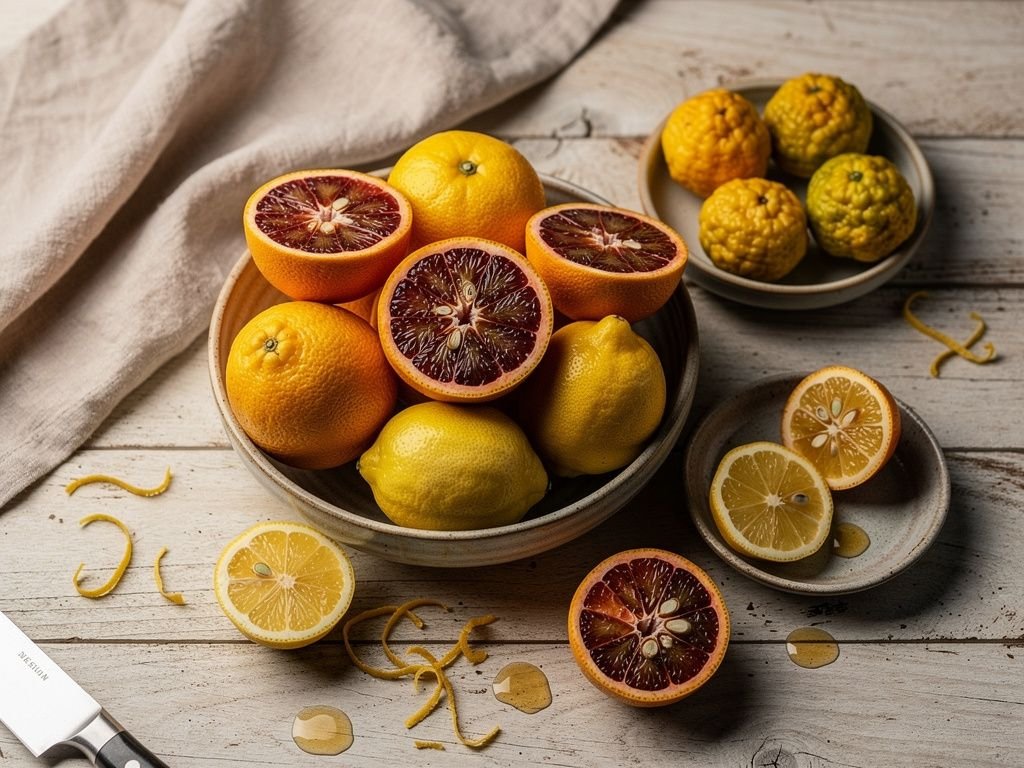
Beyond the Lemon: A Tour of Citrus Worth Cooking With
Lemons and limes get all the attention, but blood oranges, Meyer lemons, and yuzu each bring something unique to a dish.